Written by local guides who were born in Yugoslavia, grew up in Ljubljana, and witnessed Slovenia’s independence in 1991.
Communist Ljubljana is a fascinating yet often overlooked side of Slovenia’s capital. While most visitors come to Ljubljana for its charming Old Town, castle, and bridges, the story of Communist Ljubljana reveals a different chapter of the city’s history. For almost five decades, Ljubljana was part of socialist Yugoslavia, and traces of that era remain visible today in its architecture, public spaces, neighbourhoods, sports venues, and everyday memories. This guide to Communist Ljubljana explores Tito’s legacy, socialist architecture, Cold War history, and the people who experienced life in Yugoslavia firsthand.
For almost five decades, Slovenia was part of Yugoslavia, a country that no longer exists but continues to shape the identity of Ljubljana today. While Slovenia became independent in 1991, traces of the Yugoslav era remain visible in the city’s architecture, public spaces, neighbourhoods, sports culture, and collective memory.
As local guides who were born in Yugoslavia and experienced Slovenia’s transition to independence, we often find that visitors are curious about this lesser-known chapter of Ljubljana’s history. The city offers a unique opportunity to explore a socialist past that was very different from that of many other Eastern European countries.
What Made Communist Ljubljana Different?
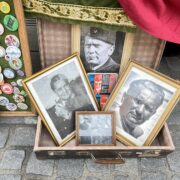
During the Cold War, Yugoslavia occupied a unique position between East and West. Under the leadership of Tito, the country followed its own socialist path, independent from Moscow and the Soviet bloc.
For many visitors, this comes as a surprise. Yugoslav citizens travelled more freely than people in most communist countries, foreign products were available, Western music was popular, and tourism flourished along the Adriatic coast.
Understanding this distinctive position helps explain why Ljubljana developed differently from many cities behind the Iron Curtain.
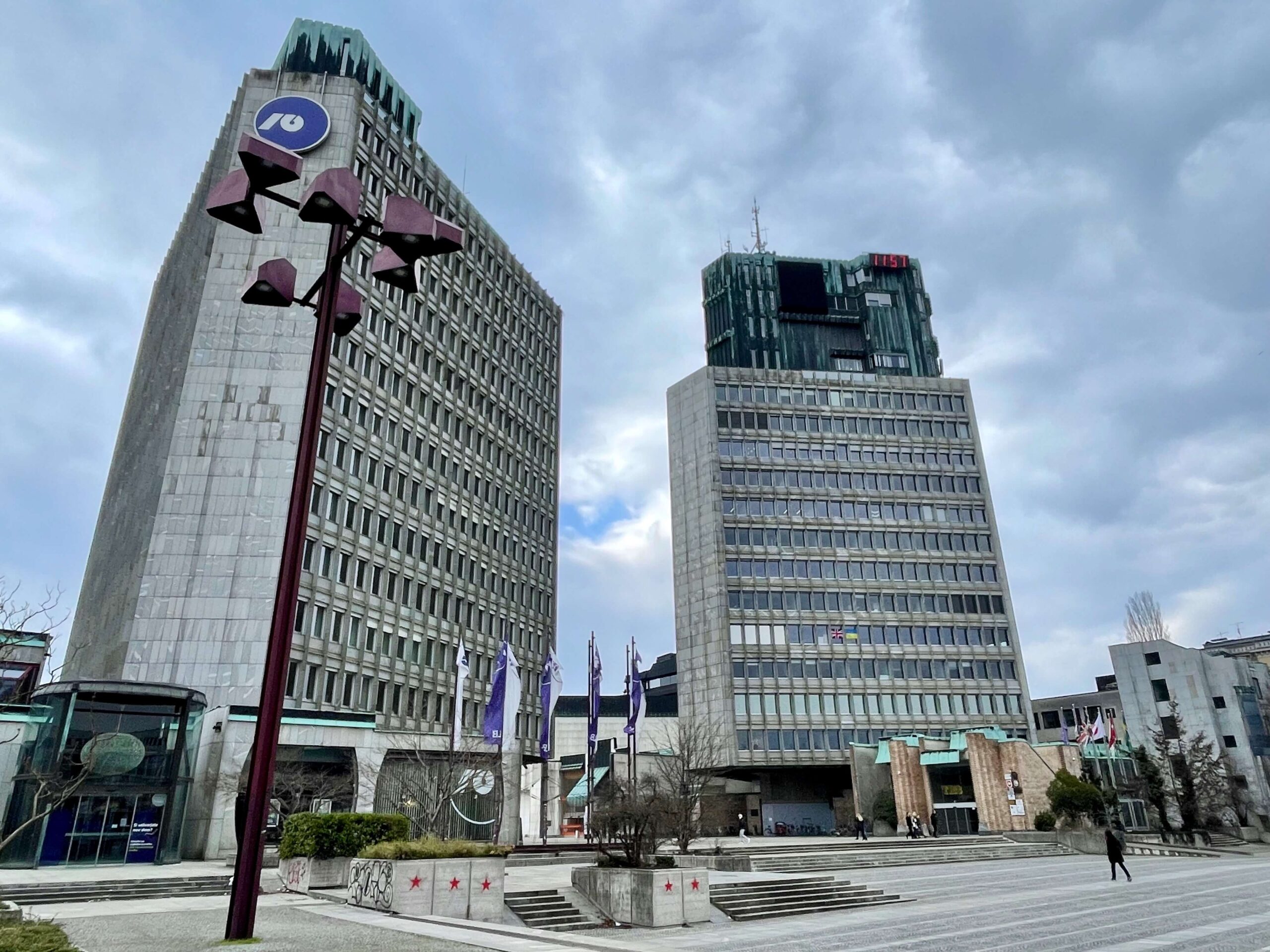
Communist Ljubljana and Republic Square
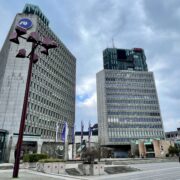
One of the most important places connected to both Yugoslavia and modern Slovenia is Republic Square.
Surrounded by imposing modernist buildings, the square became the symbolic centre of Slovenia’s independence movement. It was here that thousands gathered during the dramatic events that led to the birth of the independent Slovenian state in 1991.
Today, visitors often cross the square without realizing they are walking through one of the most significant locations in modern Slovenian history.
Nearby, the Parliament area reflects the political transformation from a Yugoslav republic to an independent European nation.
Communist Ljubljana Architecture and Modernism
Many tourists associate Ljubljana with the work of Jože Plečnik, whose architecture helped shape the city’s identity. Yet another layer of Ljubljana’s urban landscape emerged during the Yugoslav period.
The decades after World War II brought rapid urban development, new public institutions, office buildings, residential districts, and ambitious architectural projects.
Buildings such as the Astra Building remain examples of the optimism and modernity that characterized parts of socialist Ljubljana. Their design reflects an era that embraced progress, technology, and urban growth.
For architecture enthusiasts, this side of Ljubljana offers a fascinating contrast to the medieval and Art Nouveau city centre.
Ajdovščina: A Crossroads of Change
The Ajdovščina area provides another glimpse into Ljubljana’s twentieth-century transformation.
Today it is a busy urban intersection, but during the Yugoslav period it became part of a rapidly modernizing city. New businesses, public institutions, and transport connections helped shape Ljubljana’s role as the capital of Slovenia within Yugoslavia.
Looking beyond the traffic and modern storefronts, visitors can still discover traces of the city’s socialist development.
The story of Communist Ljubljana is not limited to political history. It can also be discovered through urban planning, architecture, public institutions, sports venues, and the everyday experiences of people who lived in the city during the Yugoslav period.
Communist Ljubljana Beyond the Old Town: Šiška
To understand Yugoslav Ljubljana, it is important to look beyond the historic centre.
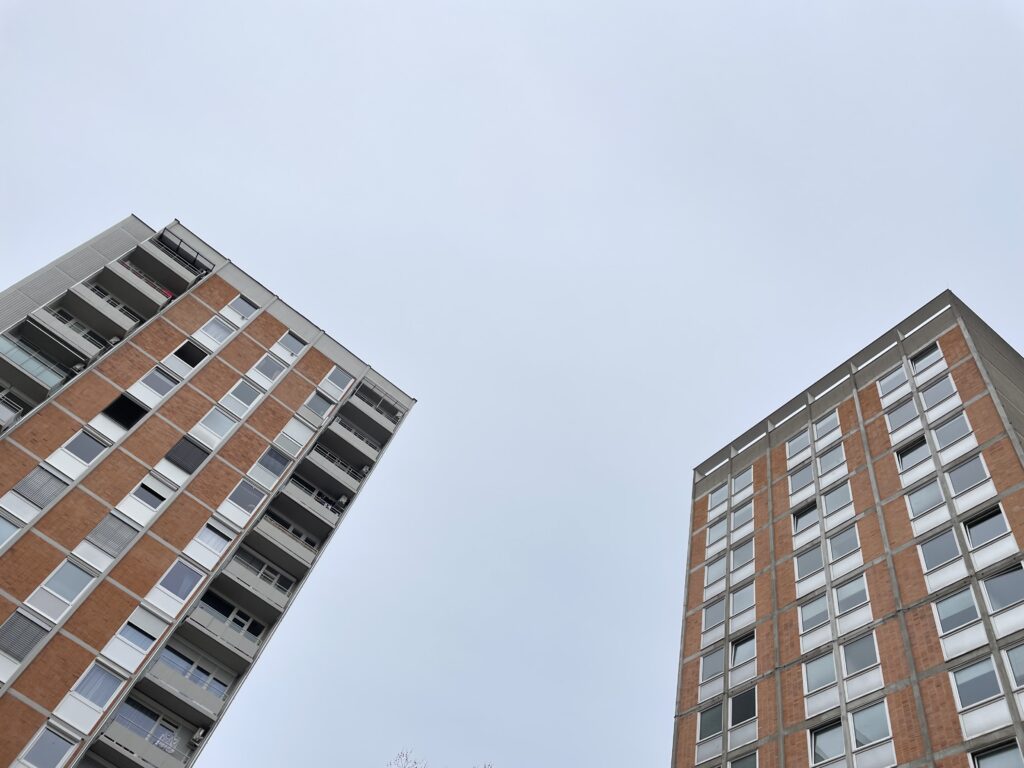
Neighbourhoods such as Šiška illustrate how Ljubljana expanded during the second half of the twentieth century. New residential areas were designed to accommodate a growing urban population and reflected changing ideas about housing, community, and everyday life.
For many Slovenians, these neighbourhoods are closely connected with childhood memories, schools, playgrounds, and a way of life that defined an entire generation.
Communist Ljubljana, Sport and Tivoli Hall
Sport occupied a special place in Yugoslav society.
One of Ljubljana’s most recognizable landmarks from this period is Tivoli Hall, which became a major venue for sporting events, concerts, and public gatherings.
Generations of Slovenians remember basketball games, hockey matches, music performances, and cultural events that took place here. The building remains a symbol of a time when sport and culture were central elements of public life.
The Yugoslav period also produced some of the region’s most celebrated athletes, many of whom continue to inspire sports fans today.
Everyday Life in Communist Ljubljana
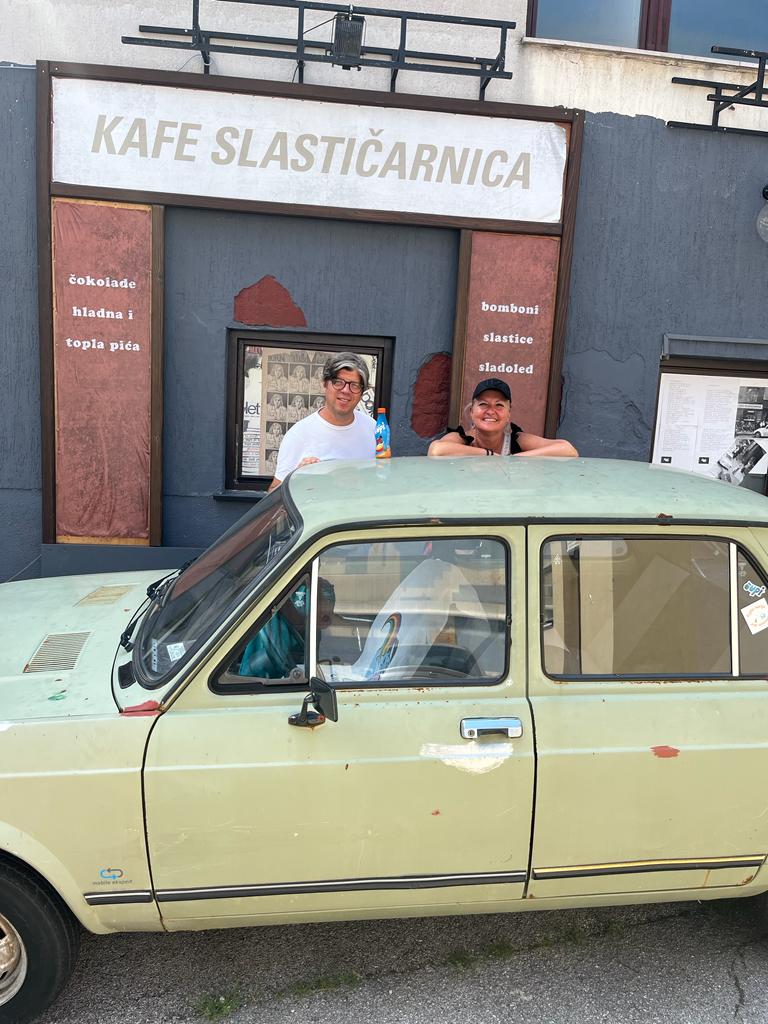
While politics often dominates discussions about Yugoslavia, visitors are frequently most interested in everyday life.
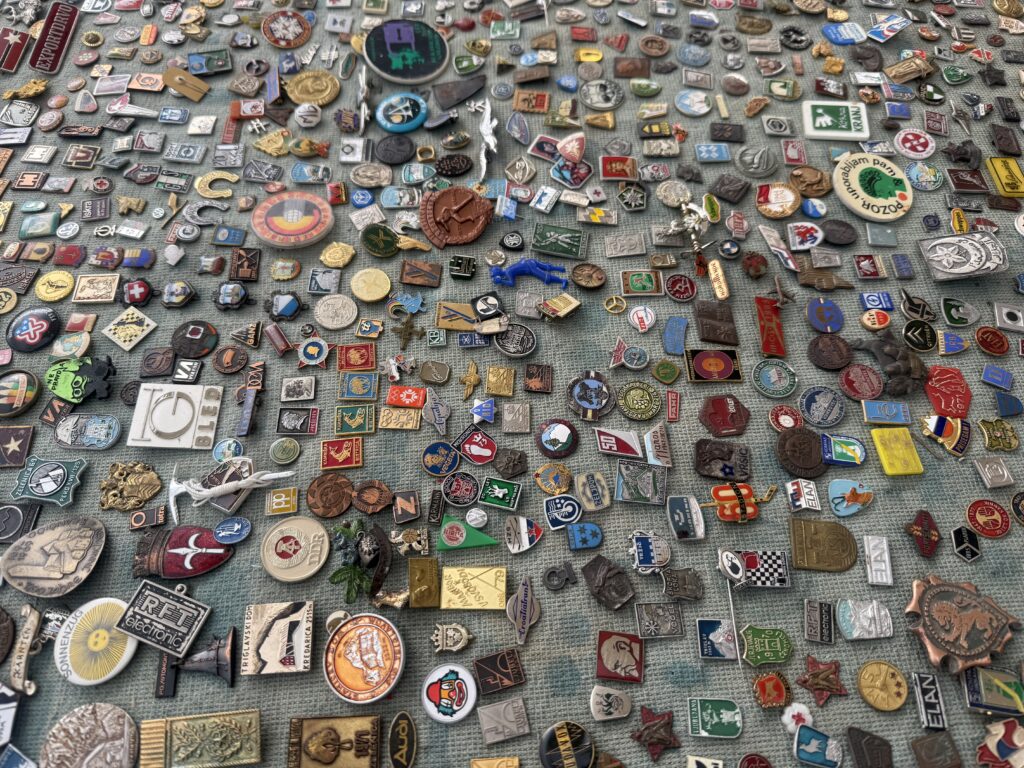
What did people eat? What music did they listen to? How did they spend their holidays? What was school like? Which products were considered special?
These questions reveal a more personal side of history.
For many Slovenians, memories of Yugoslavia are connected not only to political events but also to friendships, family traditions, sporting achievements, popular culture, and shared experiences that stretched across a country of more than twenty million people.
Is This a Communist Tour?
Many visitors searching online use terms such as “communist tour Ljubljana,” “communist history tour,” or “communist Yugoslavia.”
However, the history of Yugoslavia is more complex than many people realize.
Unlike most countries behind the Iron Curtain, Yugoslavia followed its own socialist path under Tito’s leadership. The country broke with Stalin in 1948, was a founding member of the Non-Aligned Movement, and maintained stronger connections with Western Europe than many other socialist states.
For this reason, many historians prefer terms such as socialist Yugoslavia rather than simply communist Yugoslavia.
That said, visitors searching for a communist tour in Ljubljana are usually interested in the same themes: Tito, socialist architecture, everyday life, Cold War history, political change, and the legacy of Yugoslavia in modern Slovenia.
Whether you call it a communist tour, a socialist history tour, or a Yugoslav heritage tour, Ljubljana offers a fascinating opportunity to explore one of the most unique chapters of twentieth-century European history.
Why Visitors Are Fascinated by Communist Ljubljana
Interest in Yugoslavia has grown significantly in recent years.
Some visitors are attracted by Cold War history. Others are curious about Tito, socialist architecture, or life behind the Iron Curtain. Many simply want to understand a chapter of European history that is rarely discussed in traditional travel guides.
Ljubljana offers an ideal place to explore this story because it combines a well-preserved historic centre with visible traces of a much more recent past.
The city’s Yugoslav heritage is not always obvious. It often hides in plain sight, waiting to be discovered through the buildings, squares, neighbourhoods, and stories that shaped modern Slovenia.
Discover Communist Ljubljana Today
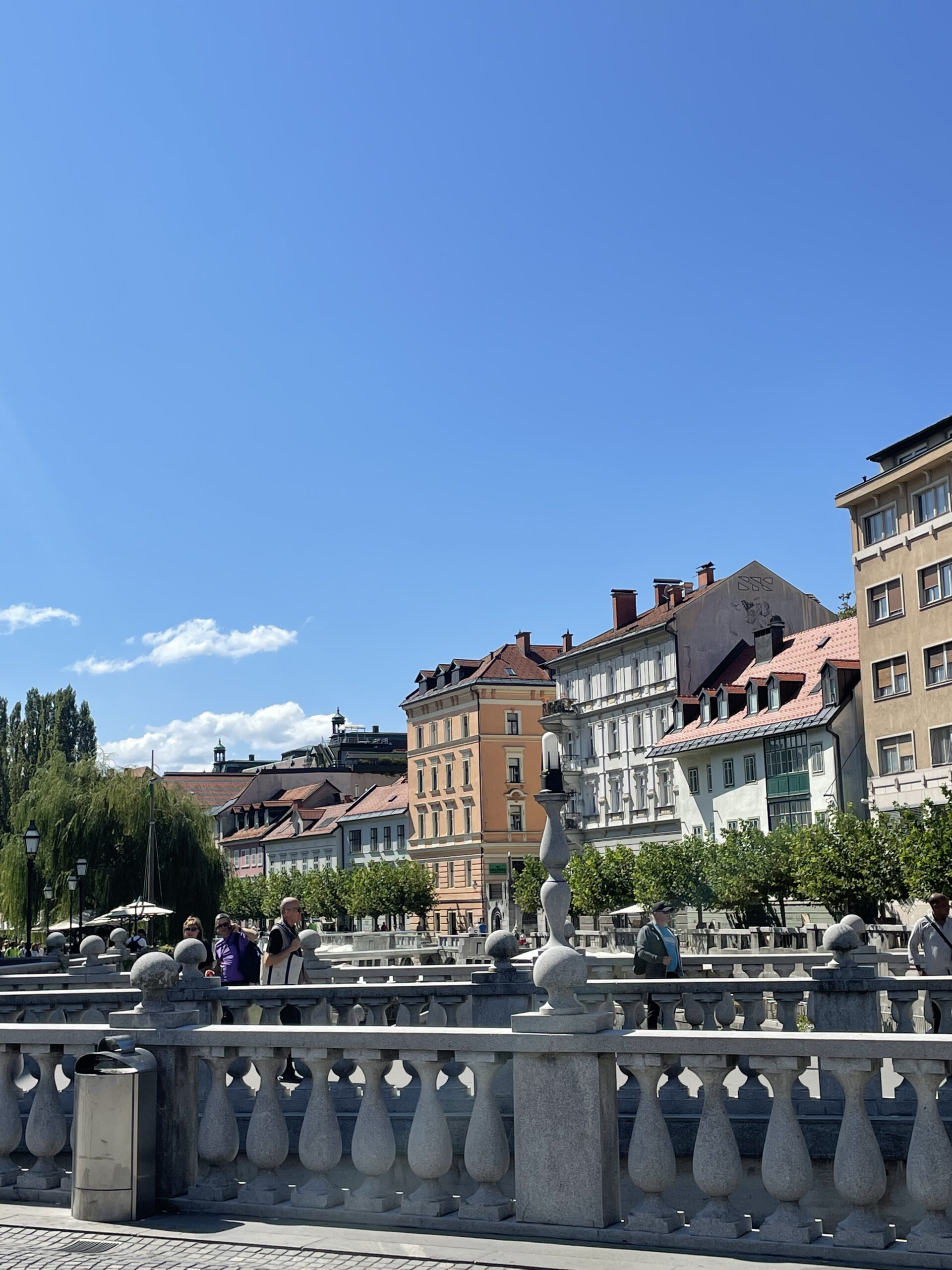
Most tourists leave Ljubljana remembering the Dragon Bridge, the Triple Bridge, and the castle. Yet another Ljubljana exists beyond these famous landmarks.
It is a city of modernist architecture, sporting legends, political transformations, everyday memories, and fascinating stories from the Yugoslav era.
Exploring this side of Ljubljana reveals a deeper understanding of Slovenia’s capital and offers a perspective that many visitors never encounter.
For travellers interested in Tito, Yugoslavia, socialist architecture, everyday life during socialism, Cold War history, or a communist tour in Ljubljana, the Slovenian capital remains one of Europe’s most intriguing and underrated destinations.
Related Articles
- Tito in Ljubljana: What Remains of Yugoslavia’s Most Famous Leader?
- Socialist Architecture in Ljubljana: A Different Side of the City
- Everyday Life in Yugoslavia: What Was It Really Like?
- Sports, Music and Pop Culture in Yugoslav Ljubljana
- Why Foreign Visitors Are Fascinated by Yugoslav Ljubljana
You may also be interested in:
- Tito’s Socialist Ljubljana Walking Tour
- Real Socialist City by Bike Tour
- Little Yugoslavia Bike Tour
For many visitors, Communist Ljubljana reveals a side of the city that guidebooks rarely explain. Looking beyond the medieval centre allows travellers to better understand Slovenia’s twentieth-century history and the legacy that continues to shape Ljubljana today.
Recommended Resources
- Museum of Contemporary History of Slovenia: https://www.muzej-nz.si
- Visit Ljubljana: https://www.visitljubljana.com
- I Feel Slovenia: https://www.slovenia.info
- Encyclopaedia Britannica – Josip Broz Tito: https://www.britannica.com/biography/Josip-Broz-Tito
Frequently Asked Questions About Yugoslav Ljubljana
Was Ljubljana part of Yugoslavia?
Yes. Ljubljana was the capital of the Socialist Republic of Slovenia, one of the six republics that formed Yugoslavia until Slovenia became independent in 1991.
Who was Tito?
Josip Broz Tito was the leader of Yugoslavia from the end of World War II until his death in 1980. He remains one of the most influential and debated figures in the history of the former Yugoslavia.
Can you still see Yugoslav history in Ljubljana?
Absolutely. Visitors can discover traces of the Yugoslav era in Republic Square, the Parliament area, modernist architecture, residential neighbourhoods, sports venues such as Tivoli Hall, and many stories connected to everyday life during socialism.
Is Yugoslavia still a country?
No. Yugoslavia dissolved during the 1990s. Slovenia declared independence in 1991 and is today a member of the European Union and the Schengen Area.
Is there a communist tour in Ljubljana?
Yes. Visitors can find several tours focusing on Yugoslav history, Tito, socialist architecture, and everyday life during the socialist period. Many tours use the term “communist tour,” although Yugoslavia’s history was more complex than that of many Eastern Bloc countries.
What is the difference between a communist tour and a Yugoslav tour?
In Ljubljana, the two terms are often used interchangeably by visitors. However, a Yugoslav tour usually explores a broader story that includes Tito, architecture, daily life, culture, sports, music, and Slovenia’s path to independence.
Why are visitors interested in Yugoslav Ljubljana?
Many travellers are fascinated by Cold War history, Tito, socialist architecture, everyday life behind the Iron Curtain, and the unique position Yugoslavia occupied between East and West during the twentieth century.
What is the best way to discover Yugoslav Ljubljana?
While some traces can be seen independently, many stories remain hidden in plain sight. Exploring Ljubljana with a knowledgeable local guide helps visitors understand the historical context behind the buildings, squares, neighbourhoods, and memories that shaped modern Slovenia.
About the Authors
Nina Regina and Primož Regina are licensed tourist guides in Ljubljana and founders of Authentic Ljubljana Tours.
Born and raised in Ljubljana, both experienced life in Yugoslavia before Slovenia’s independence in 1991. Nina holds a Master’s degree in Sociology of Culture and specializes in social history, architecture, gastronomy, and everyday life. Primož is an economist, sports enthusiast, and expert on Yugoslav history, architecture, sports culture, and daily life in socialist Slovenia.
Through their work with Authentic Ljubljana, they help travelers understand the people, places, and stories that shaped Ljubljana during the Yugoslav period and beyond.
Learn more about our background, experience, and connection to Ljubljana on our and Our Story pages.
Explore More
Interested in discovering another side of Ljubljana?
Join one of our specialized tours focused on Tito, Yugoslavia, socialist architecture, everyday life, and the hidden stories of twentieth-century Ljubljana.
Authentic Ljubljana Tours
https://www.authenticljubljana.com