Roman Emona in Ljubljana: Where to See Roman Ruins Today
Two thousand years ago, long before medieval houses and Baroque churches appeared, a Roman city stood where modern Ljubljana lies today. Its name was Emona (Colonia Iulia Aemona), an important Roman settlement founded in the early 1st century AD.
Although the modern city grew above it, traces of Roman Emona can still be discovered in several places around Ljubljana. Visitors walking through the historic centre may not realise that beneath the streets lie remains of a carefully planned Roman colony with walls, streets, houses and public buildings.
Today, Ljubljana preserves several visible remains of this ancient city, including Roman walls, mosaics and archaeological sites that allow visitors to experience the story of Emona.
This guide explains what Roman Emona was and where you can still see Roman ruins in Ljubljana today.
What Was Roman Emona?
🎥 Watch: What Roman Emona looked like 2,000 years ago
Video: City Museum of Ljubljana (MGML)
This short video produced by the City Museum of Ljubljana shows how the Roman city of Emona was organised, including its walls, streets and residential buildings.
Roman Emona was a Roman colony founded in the early 1st century AD, most likely during the reign of Emperor Augustus. The settlement was built on an important route connecting northern Italy with the Danube region and the Balkans.
Like many Roman cities, Emona was carefully planned. It had a rectangular layout surrounded by defensive walls and organized streets following the Roman grid system.
Inside the city lived merchants, craftsmen, soldiers and administrators. Archaeological discoveries show that Emona had many features typical of Roman urban life:
- paved streets
- sewer systems
- residential houses
- public buildings
- baths and heating systems.
The population of Emona is estimated to have been around 5,000 to 6,000 inhabitants, making it a relatively important regional centre in the Roman province.
The city flourished for several centuries before declining in the late Roman period during the migrations of the 5th century.
Although the Roman city eventually disappeared, its remains still lie beneath modern Ljubljana.
Where Can You See Roman Emona in Ljubljana Today?
Several archaeological sites around Ljubljana reveal fragments of the ancient Roman city. These locations form part of the Emona Archaeological Park, a network of sites where visitors can explore Roman remains within the modern urban landscape.
Below are the most important places where Roman Emona can still be seen.
Roman Wall at Mirje
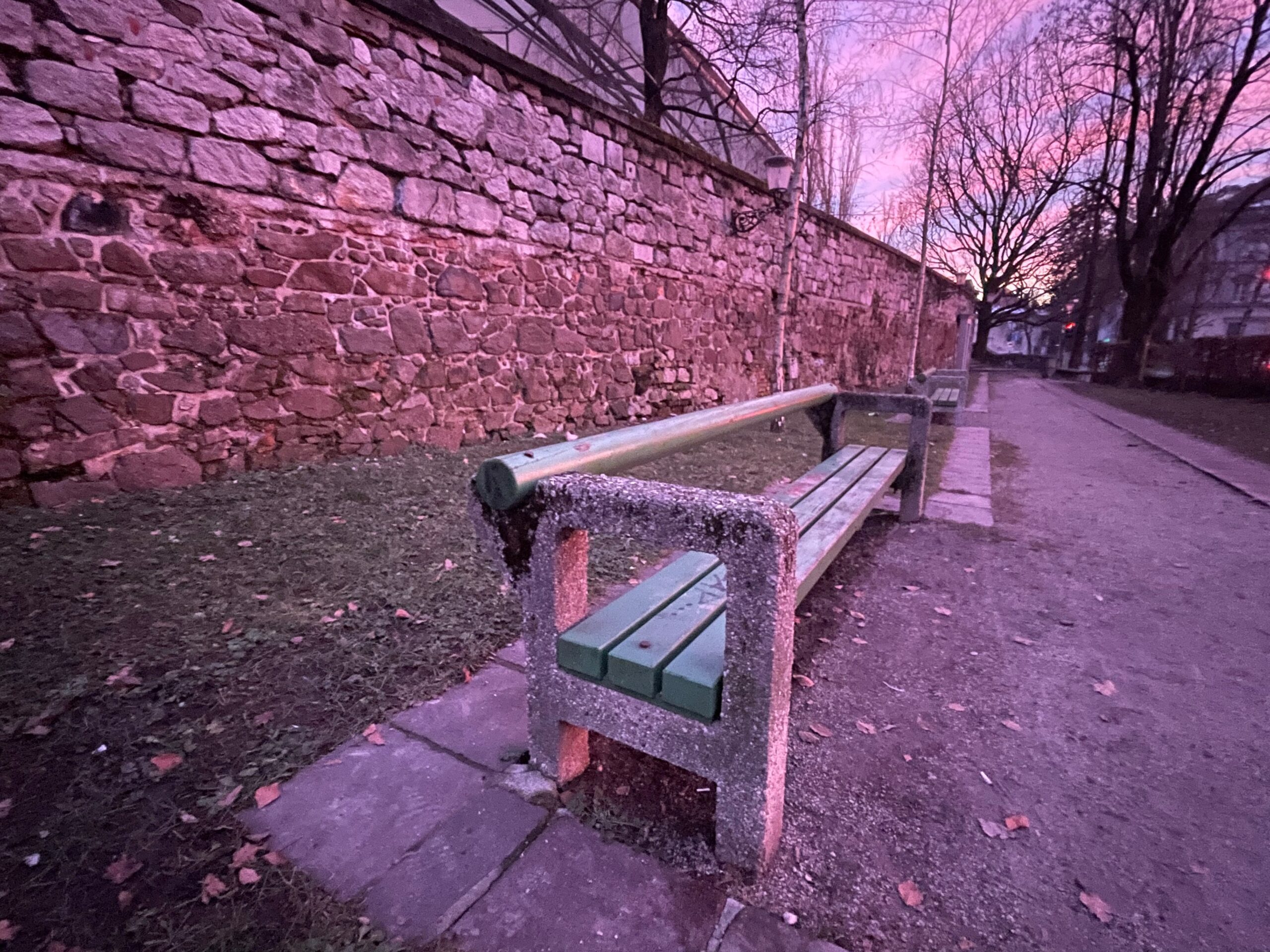
One of the most visible remains of Roman Emona is the southern section of the Roman city wall located in the Mirje district.
The wall once formed part of the defensive system protecting the Roman colony. Large stone blocks created a strong barrier around the city, with towers and gates controlling access.
In the 1930s, the Slovenian architect Jože Plečnik redesigned the area around the wall. He integrated the Roman remains into a park-like space and added architectural elements such as a pyramid and stone colonnades.
Today visitors can walk along this preserved section of the wall and imagine the boundaries of the ancient Roman city.
Location: Mirje district, south of the city centre.
Emona House Archaeological Park
Another fascinating site is the Emona House Archaeological Park, which reveals the remains of a Roman residential building.
Video: City Museum of Ljubljana (MGML)
Excavations uncovered parts of a house dating from the first centuries of Emona. Visitors can see:
- walls of residential rooms
- remains of Roman architecture
- mosaic floors
- parts of a hypocaust heating system.
The hypocaust was an advanced Roman heating technology that circulated warm air beneath floors and inside walls, keeping the house warm during colder months.
This archaeological site provides a glimpse into the daily life of wealthier Roman inhabitants of Emona.
Location: near Mirje and Slovenska cesta.
Early Christian Centre of Emona
One of the most important archaeological discoveries related to Emona is the Early Christian Centre, located close to the city centre.
The complex dates from the late Roman period and includes remains of:
- a baptistery
- mosaic floors
- religious buildings connected with early Christianity.
These findings show that Christianity was already present in Emona before the collapse of Roman authority in the region.
The preserved mosaics and architectural remains reveal the religious transformation that occurred during the late Roman era.
Location: near Erjavčeva Street.
Roman Remains at Kongresni trg
Another important location connected to Roman Emona lies beneath Kongresni trg (Congress Square).
Archaeological excavations revealed remains of structures located near the northern entrance to the Roman city. Outside Roman walls it was common to find cemeteries along the roads leading into the city.
Discoveries in this area include Roman burial grounds and traces of buildings connected with the outskirts of the ancient settlement.
Although most of the remains are underground, Kongresni trg marks an important point in the historical layout of Emona.
Location: Congress Square, Ljubljana.
City Museum of Ljubljana
The City Museum of Ljubljana (Mestni muzej Ljubljana) is one of the best places to learn more about Roman Emona.
The museum displays numerous archaeological discoveries uncovered during excavations in the city. Visitors can see objects from everyday Roman life, including:
- tools
- pottery
- jewellery
- household items
- architectural fragments.
The museum also provides detailed explanations of the history and structure of Roman Emona and serves as a starting point for exploring the archaeological sites located around the city.
Location: Gosposka ulica.
Walking the Emona Archaeological Trail
Visitors interested in Roman history can explore Ljubljana through the Emona Archaeological Trail, which connects several Roman sites across the city centre.
A suggested route includes:
- City Museum of Ljubljana
- Roman Wall at Mirje
- Emona House Archaeological Park
- Early Christian Centre
- Kongresni trg
This route allows visitors to walk through the layers of history that shaped Ljubljana.
While the medieval and Baroque city is clearly visible above ground, the Roman foundations of Ljubljana remain quietly present beneath the streets.
Why Roman Emona Matters
Roman Emona represents the earliest urban predecessor of modern Ljubljana.
The Roman colony introduced organized urban planning, infrastructure and cultural connections with the wider Roman Empire.
Even though most of the ancient city is buried beneath later layers of development, archaeological discoveries continue to reveal new information about life in this Roman settlement.
Today the remains of Emona allow visitors to explore two thousand years of Ljubljana’s history within the modern city.
FAQ About Roman Emona
Where can you see Roman ruins in Ljubljana?
Roman remains can be seen at several locations in Ljubljana, including the Roman Wall in Mirje, the Emona House Archaeological Park, the Early Christian Centre near Erjavčeva Street and archaeological remains connected with Kongresni trg. Many discoveries are also displayed in the City Museum of Ljubljana.
What was Emona?
Emona was a Roman colony founded in the early 1st century AD on the site of modern Ljubljana in Slovenia.
How big was Roman Emona?
Roman Emona had approximately 5,000 to 6,000 inhabitants and was surrounded by defensive walls protecting the city.
Key Facts About Roman Emona
Visible remains today: Roman Wall at Mirje, Emona House Archaeological Park, Early Christian Centre, archaeological remains at Kongresni trg
Roman name: Colonia Iulia Aemona
Founded: early 1st century AD
Location: modern Ljubljana, Slovenia
Estimated population: around 5,000–6,000 inhabitants
City layout: Roman grid plan with defensive walls
About the Author
Nina Regina – Authentic Ljubljana
Nina Regina holds a degree in Spanish Language and Literature and a Master’s degree in Sociology of Culture. She is a licensed tourist guide in Ljubljana with nearly 20 years of experience interpreting the history and cultural heritage of the city through her work with Authentic Ljubljana.
Learn more about Nina and the work behind Authentic Ljubljana.
Explore Ljubljana Through Time
Ljubljana is a city shaped by many historical layers. Beneath the modern capital lie traces of Roman Emona, medieval streets, Baroque architecture and the urban vision of Jože Plečnik.
If you would like to explore the history of the city further, continue with these articles:
- Roman Emona – the ancient Roman city beneath Ljubljana
- Medieval Ljubljana – the city of craftsmen, merchants and city walls
- Baroque Ljubljana – the transformation of the city after the great fire
- Plečnik’s Ljubljana – the architect who reshaped the capital
- Ljubljana in the Yugoslav period – the twentieth-century city
Visit the Roman Sites of Ljubljana
Many of the places mentioned in this article can still be visited today. Some of the most important locations connected to Roman Emona include:
- Roman Wall at Mirje
- Emona House Archaeological Park
- Early Christian Centre near Erjavčeva Street
- Archaeological remains at Kongresni trg
- City Museum of Ljubljana
Walking through Ljubljana today means walking across nearly two thousand years of history, where Roman foundations still shape the modern city.
Discover Ljubljana with a Local Guide
If you would like to experience the history of Ljubljana in person, Authentic Ljubljana Tours offers guided walks dedicated to the historical layers of the city – from Roman Emona to medieval Ljubljana, Plečnik’s architecture and the twentieth-century transformations of the capital.
Learn more about the tours here:
Authentic Ljubljana Tours
Recent Posts
Roman Emona in Ljubljana: Where to See Roman Ruins Today
Is Ljubljana Worth Visiting in 2026? A Local Guide’s Honest Answer